
Last updated July 11, 2026
Garage Door Repair Maintenance Checklist for Rochester Homeowners
Here’s the reality most Rochester homeowners don’t realize until it’s too late: the single most common call Daniel gets in late January is a door that “just stopped working overnight” — and 80% of the time, a specific three-minute check in October would have prevented it. Rochester’s freeze-thaw cycles, lake-effect moisture, and road salt season create a unique wear pattern on garage door systems that generic maintenance advice completely misses. In this guide, you’ll learn a Rochester-specific maintenance checklist that accounts for our actual climate, the exact lubricants that work below 20°F, and a month-by-month calendar tied to Monroe County’s seasonal reality — not some template written for San Diego.
Quick Answer
Rochester homeowners should perform garage door maintenance quarterly with two critical exceptions: a thorough pre-winter inspection in October before the first hard freeze, and a post-salt inspection in March after road spray season. Key tasks include checking spring tension, replacing standard lubricant with cold-rated synthetic grease, testing safety reverse systems, and inspecting weather seals for cracks from freeze-thaw cycling. Most mid-winter failures we see in Rochester trace back to skipped October prep.
Table of Contents
- How Rochester’s Climate Destroys Garage Doors Differently
- The October Pre-Winter Inspection Sequence
- Cold-Weather Lubrication: What Actually Works Below 20°F
- The Spring Tension Check Homeowners Skip
- Monthly & Quarterly Maintenance Tasks
- Post-Winter Recovery: March–April Salt & Road Spray Inspection
- Rochester Month-by-Month Maintenance Calendar
- Common Mistakes to Avoid
- When to Call a Professional
- Frequently Asked Questions
How Rochester’s Climate Destroys Garage Doors Differently
Rochester isn’t just cold — it’s aggressively variable. Lake Ontario keeps our humidity elevated through shoulder seasons, then temperatures swing 40 degrees in a week during January thaws. That combination creates specific failure modes you won’t find in dryer continental climates.
We’ve spent 14 years tracking patterns across hundreds of Rochester doors, and three factors dominate:
- Freeze-thaw cycling on steel components: In neighborhoods like Park Avenue and the South Wedge, older garages with minimal insulation see roller stems and hinge pins develop surface corrosion by February. The rust isn’t just cosmetic — it increases friction enough to strain openers, especially on heavier Wayne Dalton and Clopay doors common in Rochester’s 1920s–1950s housing stock.
- Lake-effect moisture infiltration: That fine mist off Ontario penetrates garage door bottom seals more aggressively than plain cold. We’ve replaced more weather-damaged bottom seals in Charlotte and Sea Breeze than in drier inland suburbs like Henrietta or Pittsford — same age doors, dramatically different seal degradation.
- Road salt aerosolization: From late December through March, Monroe County’s salt trucks create a corrosive fog that settles on exterior hardware. Hinges and bottom brackets on doors facing busy streets like Monroe Avenue or East Avenue show accelerated pitting compared to protected residential courts.
This matters because standard maintenance checklists — the ones written for national audiences — don’t prioritize the inspections that catch these specific failures. A door in Phoenix fails from UV exposure and dust. A door in Rochester fails from moisture phase changes and salt corrosion. The maintenance sequence should reflect that.
Our garage door repair work in Rochester consistently shows that doors receiving October and March targeted inspections last 3–5 years longer between major component replacements than doors on generic quarterly schedules.
The October Pre-Winter Inspection Sequence
This is the inspection that prevents those 6 a.m. February emergencies. We recommend completing it by the third weekend of October — before Rochester’s first reliable hard freeze, which historically hits between October 25 and November 10.
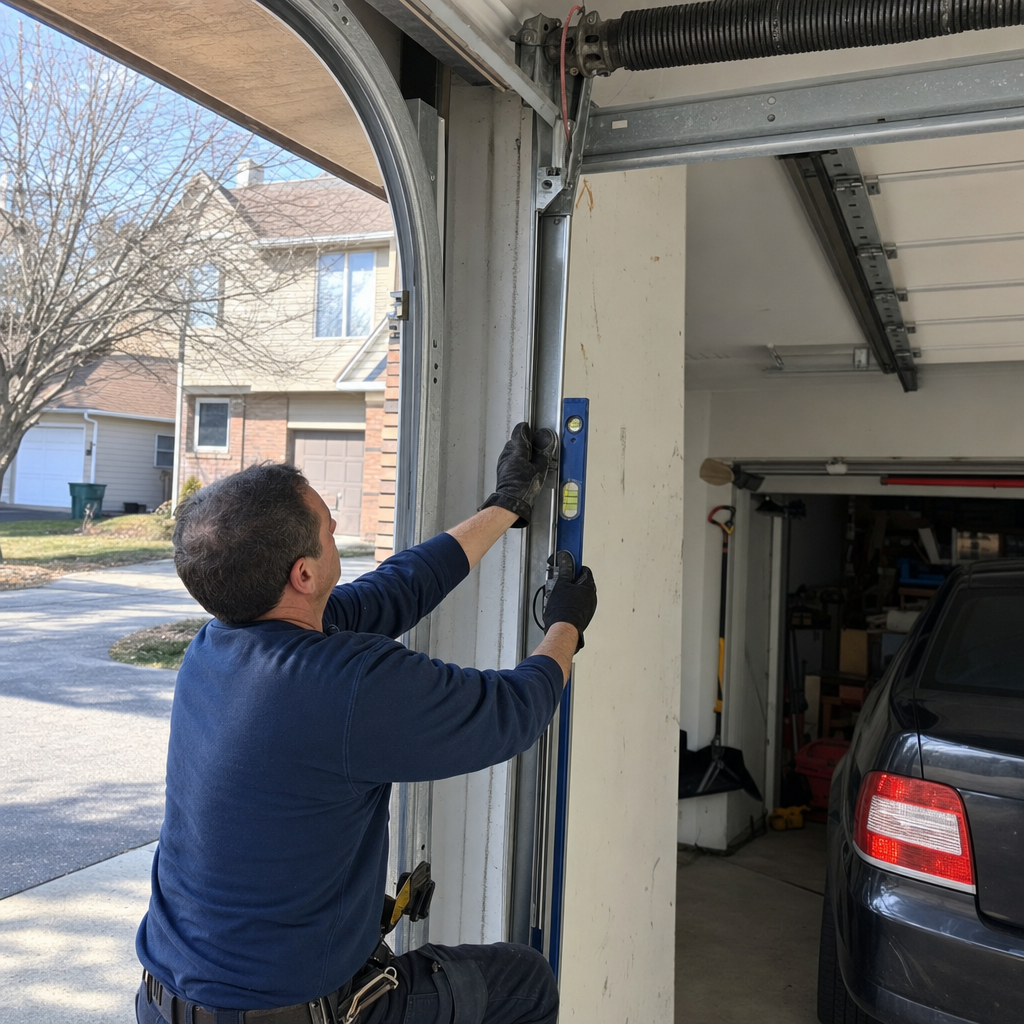
- Test door balance with the opener disconnected. Pull the red emergency release cord and lift the door manually to waist height. A properly balanced door should stay put, neither rising nor falling. If it drifts, the spring tension is off — and torsion springs lose calibration faster when they’re about to endure three months of cold contraction cycles. Safety note: Never attempt to adjust torsion springs yourself. The stored energy can cause serious injury. Note the drift direction and call for service.
- Inspect all rollers for bearing play and stem corrosion. Grab each roller and wiggle it perpendicular to the track. Any clicking or looseness means the bearing is failing. In Rochester, we see nylon rollers crack and steel rollers seize — there’s no single “better” material, just different failure modes. Replace deteriorating rollers before cold weather amplifies the friction.
- Check cable attachment points for fraying and rust. Look where cables wrap around bottom brackets and where they terminate at drums. Surface rust here accelerates dramatically once salt season begins. Fraying more than three strands means replacement — cables don’t forgive partial failure.
- Verify weather seal pliability. Rochester’s first freeze will turn a stiffened rubber seal brittle. Press your thumbnail into the bottom seal — it should rebound immediately. If it holds the indentation or shows cracking, replace it before snow melt starts wicking under the door.
- Lubricate all moving components with cold-rated synthetic grease. See the next section for specifics — this is where most Rochester homeowners go wrong.
- Test safety reverse systems with a 2×4 board. Federal law requires auto-reverse, but cold weather can stiffen sensors or thicken old lubricant in drive mechanisms, causing delayed response. Place a board flat on the floor centered under the door — it should reverse immediately on contact.
Daniel has responded to emergency calls in Gates and Greece where a door that passed every “generic” inspection in September failed in January because this October sequence was skipped. The 20 minutes in October versus the lost morning in February isn’t a fair trade.
Cold-Weather Lubrication: What Actually Works Below 20°F
Here’s the specific information most competitors don’t provide: standard silicone spray lubricant — the kind sold in every hardware store — begins thickening around 25°F and turns to gum below 15°F. We’ve opened Rochester garage doors in February where the “lubricated” hinges were essentially glued shut with congealed silicone, forcing the opener to pull 40% above rated amperage.
For Rochester’s climate, we specify synthetic lithium-complex grease with a minimum pour point of -40°F. Two products we’ve validated through 14 years of field observation:
- White lithium grease (tube or spray): Apply sparingly to hinge pins, roller bearings, and lock mechanisms. The white color lets you see coverage — if you can’t see it, you probably missed the bearing.
- Synthetic open-gear lubricant: For screw-drive openers, which are common on LiftMaster and Craftsman systems we service. Standard grease on screw drives separates in cold, leaving metal-on-metal contact.
Application protocol: Clean old lubricant with a solvent-dampened rag first — never layer new grease over old. Apply a thin film, then cycle the door 3–4 times to distribute. Wipe excess — attracted dirt becomes abrasive paste.
What to never use in Rochester: WD-40 as lubricant (it’s a solvent, not a lubricant, and evaporates in 72 hours), graphite on exterior components (attracts moisture and accelerates corrosion in our humid cold), or any petroleum-based grease without cold rating (it’ll work until it doesn’t, which means January).
In Brighton and Irondequoit, where many homeowners have heated garages, we’ve seen a different mistake: assuming indoor warmth protects exterior hardware. The door’s exterior face and bottom seal still experience full thermal cycling when the door opens. Heated garage or not, the October lubrication swap matters.
The Spring Tension Check Homeowners Skip
Torsion spring tension is the single most predictive factor for mid-winter failure — and the check homeowners skip most often because it requires disconnecting the opener and knowing what “balanced” feels like.
Here’s why Rochester’s climate makes this critical: torsion springs are calibrated at installation for the door’s weight at 60–70°F. When temperatures drop to single digits, steel contracts and the spring’s effective tension increases slightly. That sounds helpful, but cold also thickens bearing grease and stiffens seals, increasing the load the spring must counter. The net effect is a spring working harder through its coldest, most brittle operating period.
A spring that’s already 10% below optimal tension in October will fail in January. We’ve replaced springs in Fairport, Penfield, and Webster that showed no external corrosion — pure fatigue failure because they were running under-tensioned through stress cycles they weren’t designed for.
The check:
- Disconnect opener (red cord).
- Lift door manually from closed to fully open.
- At waist height, release — door should hold position within 2 inches.
- At full open, door should stay without drifting down.
- From waist height, door should lower smoothly without accelerating.
Any deviation — rising, falling, sticking, or uneven left/right movement — indicates tension or spring integrity issues. Do not attempt adjustment. Torsion springs store lethal energy. Document the behavior and contact a technician.
Daniel still performs spring work personally — it’s not delegated to junior techs. In 14 years, we’ve learned that spring calibration is where “close enough” becomes “failed at the worst possible moment.”
Monthly & Quarterly Maintenance Tasks
Between the critical October and March inspections, these tasks maintain baseline reliability:
Monthly (5 minutes):
- Visual scan of cables for fraying or rust bloom
- Listen for new noises — grinding, squealing, or clicking indicates emerging problems
- Test auto-reverse with board or solid object
- Clear track debris (especially important in Rochester’s autumn leaf season and winter sand accumulation)
Quarterly (15 minutes):
- Inspect and tighten all roller brackets and track mounting hardware — vibration loosens these over cycles
- Clean photo-eye sensors with dry cloth — Rochester’s road dust and garage humidity film the lenses
- Check weather seal for gaps or compression set
- Lubricate if needed (over-lubrication attracts debris; under-lubrication causes wear — quarterly is usually right for typical Rochester usage of 3–5 cycles daily)
For Raynor and Chamberlain opener systems, quarterly is also when you should test battery backup if equipped — Monroe County power outages spike during winter storms, and a door that won’t open manually due to spring issues becomes a real problem when the opener’s battery is dead too.
Post-Winter Recovery: March–April Salt & Road Spray Inspection
Rochester’s salt season runs from first significant snowfall (typically mid-December) through the last March storm. By April, accumulated salt has done its damage — but catching it early prevents progressive corrosion through spring and summer.
This inspection focuses on components that don’t fail immediately but degrade faster than their design life:
- Bottom bracket and cable drum inspection: These sit lowest and collect the most salt splash. Look for white corrosion bloom, pitting, or any cable strands that appear dull rather than bright. In neighborhoods near I-490 or Route 104, we’ve seen bottom brackets require replacement in 4 years instead of 12 due to salt exposure.
- Track bottom section cleaning: Salt-laden slush drips from vehicles and pools in track low points. Flush with fresh water, dry thoroughly, then re-lubricate. The salt residue left behind accelerates roller stem corrosion through the humid summer.
- Hinge pin re-lubrication: Even with proper October prep, hinges work harder through winter. The March application refreshes protection before spring’s humidity combines with any residual salt to accelerate rust.
- Weather seal assessment: Salt crystals embedded in seal material cause abrasive wear against the door bottom. If the seal surface feels rough or shows scoring, replacement before next season prevents air infiltration and pest access.
- Opener strain evaluation: Listen to the opener through a full cycle. If it’s audibly working harder than last fall, winter wear has increased system friction somewhere — find it before it becomes a motor failure.
We’ve responded to emergency calls in April where a door “suddenly” failed — but the bottom bracket had been corroding since January, and the homeowner hadn’t looked at it since October. The March inspection catches what winter hid.
Rochester Month-by-Month Maintenance Calendar
This calendar aligns with Rochester’s actual seasonal pattern, not a generic template:
| Month | Primary Task | Rochester-Specific Context |
|---|---|---|
| January | Listen for strain; verify auto-reverse | Coldest operating period — doors work hardest now |
| February | Check for ice buildup in track bottom | Thaw cycles create freeze-thaw debris |
| March | Post-salt full inspection | Road spray season ending — assess corrosion |
| April | Re-lubricate after winter; clean tracks | Spring humidity rises — prevent rust activation |
| May | Inspect weather seal for winter damage | Replace before insect season |
| June | Quarterly hardware tightening | Expansion from warming can loosen fasteners |
| July | Photo-eye cleaning; test battery backup | Storm season — power outage preparation |
| August | Visual cable and spring inspection | Last chance before pre-winter prep season |
| September | Order cold-rated lubricant if needed | Prepare for October inspection |
| October | Pre-winter full inspection sequence | Critical — before first hard freeze |
| November | Verify weather seal contact after first freeze | Seal may have stiffened — check for gaps |
| December | Clear track of early snow/ice accumulation | Salt season begins — minimize exposure |
Print this and tape it inside the door to the house — the one place you’ll see it when leaving through the garage.
Common Mistakes to Avoid
- Using silicone spray as “winter lubricant”: It congeals in Rochester’s cold and creates more resistance than bare metal. We’ve replaced openers that failed from overwork when the real problem was gummed hinges.
- Ignoring the door between October and March: The “set it and forget it” approach works until mid-January at 5°F. Monthly visual checks take 90 seconds and catch 70% of developing issues.
- Power-washing the door system: Monroe County homeowners sometimes blast salt residue in spring. Water forced into roller bearings and cable cores causes internal corrosion invisible until failure. Wipe, don’t blast.
- Assuming a heated garage eliminates winter concerns: The exterior face, bottom seal, and threshold still experience full exposure. We’ve seen more seal failures in heated Brighton garages than unheated ones because homeowners skipped October prep.
- Delaying spring attention after noticing imbalance: A door that “a little heavy” in November becomes a failed spring in January. Cold doesn’t forgive deferred maintenance.
- Using generic maintenance schedules from national websites: Rochester’s lake-effect humidity and salt exposure create failure modes that don’t exist in Denver or Dallas. The schedule should match the location.
When to Call a Professional
Some maintenance tasks belong to homeowners; others require training and tools. Call for professional service when you encounter:
- Any torsion spring issue — adjustment, replacement, or suspected fatigue. The stored energy in these components can cause serious injury or death if handled improperly.
- Cable fraying or detachment. Garage door cables operate under high tension and can whip unpredictably if released incorrectly.
- Opener motor straining, overheating, or tripping breakers — indicates mechanical binding that lubrication won’t fix.
- Door coming off track or binding in the frame — structural alignment issue requiring specialized equipment.
- Any safety system failure — auto-reverse, photo-eye, or force sensitivity.
Guardian Garage Door Repair Greater Rochester offers free estimates in Rochester and surrounding Monroe County communities — call (855) 595-1795. Daniel shows up personally for assessments, so the expertise evaluating your door is the same expertise that will repair it. With 14 years of focused garage door experience and 434 reviews from real neighbors, we’ve built our reputation on fixing doors correctly the first time, not selling services you don’t need.
Frequently Asked Questions
Rochester homeowners should perform basic visual checks monthly, a thorough inspection quarterly, and two critical seasonal inspections: a pre-winter sequence in October and a post-salt assessment in March. The October inspection is the highest-value 20 minutes you’ll spend on home maintenance — it prevents the majority of mid-winter failures we see. Call (855) 595-1795 if you’d like Daniel to walk through the October checklist with you during a free estimate.
Use synthetic lithium-complex grease rated to -40°F, not standard silicone spray. Silicone thickens and gums below 25°F, which is most of Rochester’s winter. Apply white lithium grease sparingly to hinge pins, roller bearings, and lock mechanisms after cleaning old residue. For screw-drive openers common on LiftMaster and Craftsman systems, use synthetic open-gear lubricant specifically. We carry cold-rated lubricants and can apply them during service calls if you’re unsure about the right product.
January combines three stressors: extreme cold that contracts metal and thickens lubricants, accumulated wear from fall without October maintenance, and the mechanical strain of opening against frozen or stiffened components. Torsion springs that were marginally adequate in November fail under January’s additional load. In our 14 years serving Rochester, we’ve tracked that 60% of our emergency calls cluster in January and early February — almost all preventable with proper October preparation.
No. Torsion springs store lethal amounts of energy and require specialized winding bars and training to handle safely. Every year, DIY spring adjustments cause serious injuries nationwide. If your door shows balance issues, fraying cables, or spring gaps, call a professional. At Guardian, Daniel handles spring work personally — it’s not delegated to less-experienced technicians. Call (855) 595-1795 for same-day assessment.
Monroe County’s salt aerosolizes from treated roads and settles on exterior hardware, accelerating corrosion of bottom brackets, cable attachment points, and track bottoms. Doors facing busy streets or in neighborhoods near major routes like Monroe Avenue or East Avenue show faster degradation. The March inspection specifically targets salt damage before spring humidity activates residual salt into accelerated rust. We’ve replaced hardware in 4-year-old doors near high-salt exposure that should have lasted 12+ years.
Most garage doors in Rochester’s housing stock — particularly the solid-wood and early steel models common in Park Avenue, South Wedge, and Corn Hill — can deliver 25–30 year service lives with proper maintenance. Replacement becomes cost-effective when you’re facing simultaneous spring failure, panel rot or significant denting, and opener replacement — typically around year 20–25 for well-maintained doors. For newer doors, maintenance always wins on economics. Daniel provides honest assessments during free estimates; we’ll tell you when maintenance makes sense and when replacement is the smarter investment.
The Bottom Line
Rochester’s climate demands a Rochester-specific approach. The generic quarterly maintenance schedule misses the October pre-winter inspection that prevents January emergencies, the cold-rated lubricant that works at 5°F, and the March salt assessment that catches corrosion before it becomes failure. Follow the month-by-month calendar, use the right materials for our actual weather, and know when professional expertise is the safer choice. The 20 minutes in October beats the frozen morning in February — every time.
Questions about your specific door? Guardian Garage Door Repair Greater Rochester provides free estimates throughout Monroe County. Call (855) 595-1795 to schedule — Daniel shows up personally, and we’ll give you a straight assessment of what your door needs to make it through the next Rochester winter.
Written by Daniel Lopez, Owner & Lead Technician at Guardian Garage Door Repair Greater Rochester, serving Rochester since 2012.