
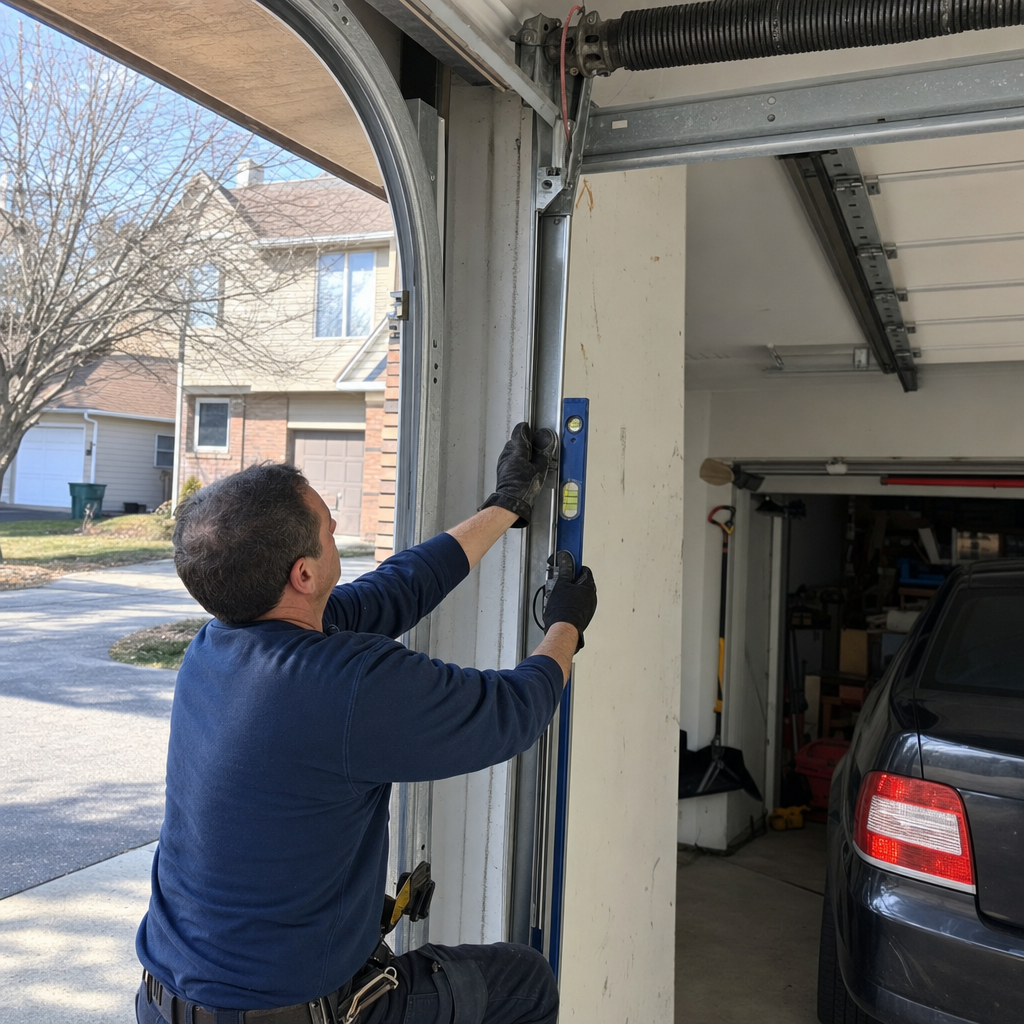
Why Your Garage Door Won’t Close in Rochester — And the One Winter Mistake That Snaps Cables Before Breakfast
A garage door that won’t close in Rochester is most often frozen to the threshold, not broken — the opener stops as a safety response to ice resistance, not because the motor failed. If you force it, you’ll likely snap a cable or strip the opener gear. Call Guardian Garage Door Repair Greater Rochester at (855) 595-1795 for same-day diagnosis, or read on to check the right things in the right order.
Last January, Daniel Lopez got a call from a homeowner in Greece at 6:47 a.m. The garage door had worked fine the night before. Now it wouldn’t budge downward, and the husband had already hit the wall button three times in frustration. By the time Daniel arrived, the opener’s thermal protection had tripped twice, and the bottom cable had frayed where it met the drum. The door hadn’t been broken when the morning started — it had been frozen. The homeowner’s generic online guide said “check your sensors first.” In Rochester, that’s backward.
The Rochester Winter Order: What to Check First, Second, Third
Most troubleshooting guides are written for climates where garages don’t weld themselves to concrete overnight. Rochester sits in the Lake Ontario snow belt, averaging close to 100 inches of snow yearly with freeze-thaw cycles that destroy bottom seals and ice doors shut. Here’s the order Daniel uses on every winter call — and why it saves homeowners from the Greece scenario.
1. Check the Threshold for Ice Before You Touch Anything
The single most common cause of a non-closing door in January isn’t electrical or mechanical. It’s physical: melted snow refroze along the bottom seal, creating a bond between the rubber and the slab. The opener detects resistance, assumes an obstruction, and stops or reverses.
Signs this is your problem:
- The door doesn’t move at all on the down cycle — no shudder, no partial travel
- The opener motor strains audibly for 2–3 seconds, then stops with a click (thermal protection tripping)
- The wall button LED blinks in a pattern, or the opener light flashes 4–5 times
- There’s visible ice, frost, or hardened slush along the bottom seal perimeter
Safe thaw method: Use a heat gun or hair dryer along the bottom seal edge, working slowly from one side to the other. Never pour hot water — it refreezes within minutes in Rochester’s sub-freezing mornings, creating thicker ice and worse adhesion. Daniel has seen homeowners turn a 10-minute thaw into a 2-hour ordeal with the hot-water approach. A heat gun set on low, held 6–8 inches from the seal, breaks the bond without thermal-shocking the rubber.
If the seal itself is cracked, hardened, or pulling away from the retainer — common after Rochester’s brutal freeze-thaw cycles — it needs replacement, not just thawing. A compromised seal lets meltwater in, which refreezes and repeats the cycle weekly.
2. Check Sensor Lenses for Frost, Not Just Misalignment
Only after confirming the door isn’t frozen do we move to the photo eyes. In Rochester, frost buildup on the lens surface is more common than actual misalignment. Lake-effect humidity crystallizes on the cold glass, creating an opaque layer the beam can’t penetrate.
Wipe both lenses with a dry cloth — not a wet one that leaves residue. If the red or green indicator LED on one sensor is out or flickering, realignment may be needed. But in winter, try the dry wipe first. Daniel estimates 30% of his “sensor” calls in January are resolved with 30 seconds of frost removal.
For persistent misalignment: the sending and receiving eyes must face each other directly, no more than 6 inches above the floor. A bump from a snowblower, garbage can, or ice chunk can knock one askew. Loosen the wing nut, adjust until both LEDs glow steady, then retighten without twisting.
3. Verify the Close-Limit Setting on the Opener
If the door starts down, travels partially, then reverses — and there’s no ice, no obstruction, and sensors are clean — the close-limit switch may need adjustment. This is more common after a power outage or surge, which can reset logic boards on older Chamberlain or Genie units.
The close-limit tells the opener how far to travel before it should stop. If set too aggressively, the opener thinks it hasn’t reached the floor and keeps hunting, triggering auto-reverse. If set too conservatively, it stops short of full closure.
Adjustment varies by brand:
- LiftMaster/Chamberlain (post-2012): Travel limits are programmed via the “Learn” button and up/down arrow buttons — consult your specific model manual
- Genie (screw drive models): Limit switches are physical dials on the power head, marked “Open” and “Close”
- Older Craftsman/Sears rebadged units: Often use a screwdriver slot on the back or side of the motor housing
Daniel’s advice: if you’re not certain of your model year or the adjustment procedure, don’t experiment. An incorrectly set close-limit can cause the door to slam or fail to reverse on actual obstruction — a genuine safety hazard. This is where Garage Door Repair expertise matters.
Why the Opener Stopping Is a Feature, Not a Bug
That click and halt when your door hits ice? It’s the opener’s auto-reverse force limit doing exactly what it was engineered to do. The motor senses resistance exceeding its programmed threshold — typically 15–25 pounds of pressure — and stops or reverses to prevent crushing whatever it assumes is underneath.
In summer, that threshold catches a child’s bike or a misplaced toolbox. In Rochester winter, it catches ice. The opener cannot distinguish between a frozen threshold and a trapped object. Its only safe response is to stop.
Homeowners who override this — holding the wall button down continuously to force the door through resistance — bypass every safety mechanism. That’s how cables snap, drums crack, and openers strip their main drive gears. The Greece homeowner Daniel mentioned held the button for 8 seconds. The repair bill went from a $0 thaw to a $180–$340 spring and cable job.
Key Takeaways:
- Ice at the threshold is Rochester’s #1 winter cause of non-closing doors — check it before anything else
- Never force the door with continuous button pressure; this overrides safety systems and causes mechanical damage
- Use a heat gun or hair dryer to thaw — hot water creates worse refreeze
- Frost on sensor lenses mimics misalignment; dry-wipe before realigning
- When in doubt, the opener stopping is protecting you — not failing you
What This Actually Costs to Fix in Rochester
Most “garage door won’t close” calls in Rochester fall into one of three cost tiers. Here’s what Daniel quotes before he arrives, based on 14 years of Monroe County service calls:
| Problem | Typical Range | What It Covers |
|---|---|---|
| Threshold ice thaw + seal inspection | $0 (DIY) or $120–$180 service call | Thawing, seal condition check, lubrication of moving parts |
| Sensor realignment or replacement | $120–$240 | Realignment, wiring check, or new photo eye pair installed |
| Spring or cable repair (from forcing frozen door) | $180–$340 | Broken torsion spring replacement or cable/drum repair |
| Opener repair (gear, limit, or logic board) | $120–$320 | Component-level repair or full opener replacement if obsolete |
The full range for Garage Door Repair in Rochester typically runs $150–$600 depending on what’s actually wrong. Daniel provides upfront pricing after diagnosis — no hidden fees, no pressure to replace what can be repaired.
When a Door That Won’t Close Becomes an Emergency
A garage door stuck open at 10 p.m. in January isn’t merely inconvenient. Your vehicle is exposed to theft and weather damage. Your home’s secondary entry point is unsecured. In neighborhoods like Corn Hill or the 19th Ward, where detached garages often sit behind the main house, that open door creates a direct path to your property.
Guardian offers emergency garage door service precisely for this scenario — not just for dramatic spring explosions or off-track disasters. Daniel maintains availability outside standard hours because Rochester’s weather doesn’t operate on business schedules. The first morning after a hard lake-effect refreeze is consistently his busiest call volume of any winter month.
He’s certified on 8 major brands including LiftMaster, Chamberlain, and Clopay, so the opener on your 1950s Greece ranch or your 1980s Webster split-level isn’t a guessing game. “Tell me what it’s doing — I’ll tell you what it needs.” That directness, backed by 434 verified reviews averaging 4.8 stars, is why homeowners call Guardian instead of gambling on an unknown technician from a franchise dispatch board.
FAQs
Most repairs run $150–$600, with simple sensor or limit adjustments at the lower end and spring/cable replacement at the higher end if the door was forced while frozen. Call (855) 595-1795 for a free estimate — we’ll diagnose before quoting.
Yes — Daniel Lopez prioritizes same-day response for doors that won’t close, especially in winter when security and weather exposure are immediate concerns. Emergency service is available outside standard hours for situations that can’t wait until morning.
Opener repair typically costs $120–$320, while new opener installation runs $250–$550. If your unit is under 10 years old and the issue is a gear, limit switch, or logic board, repair usually makes sense. If it’s original to a 1970s home in Irondequoit or lacks modern safety features, replacement is often the better investment. We’ll explain exactly what failed and why before you decide.
The most common cause is ice bonding the bottom seal to the concrete threshold, or frost obscuring the safety sensors — both Rochester-specific winter issues that don’t occur in warmer months. Metal contraction from sustained sub-freezing temperatures can also affect spring tension and track alignment. A seasonal maintenance check in late fall prevents most winter failures.
If you’d rather have it looked at, Guardian Garage Door Repair Greater Rochester offers the best garage door repair in Rochester, NY, with a no-pressure assessment — call (855) 595-1795.
Written by Daniel Lopez, Owner & Lead Technician at Guardian Garage Door Repair Greater Rochester, serving Rochester, NY.